



Home / Electric mobility / Charging at home
Tenants & homeowners’ associations
Plan a charger. Make a good start together.
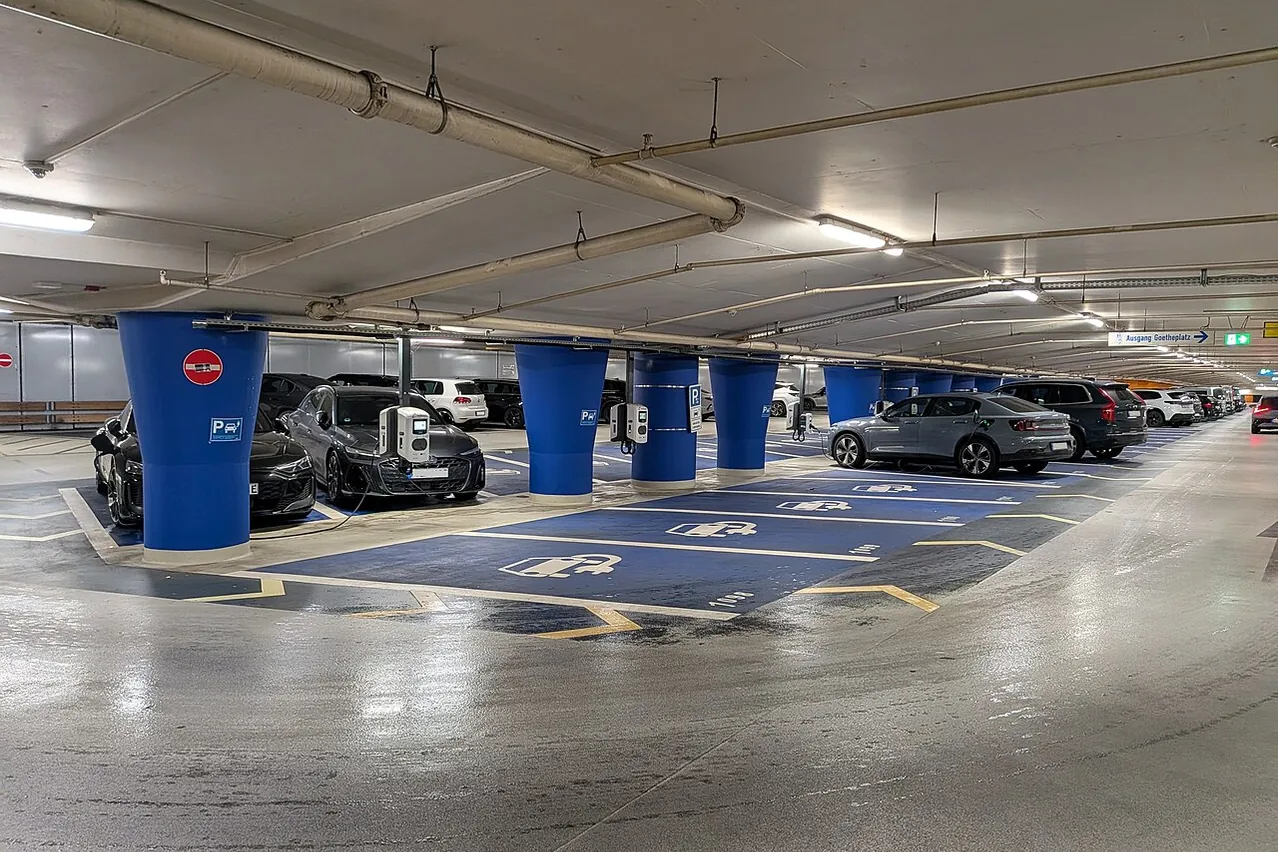
Do you have an allocated parking space and want to charge there? First clarify who decides on changes to the building. Then prepare charging needs, equipment and costs together.
No private parking space? Start here for public charging.

01 · Clarify responsibilities
Do you rent or own your flat?
I rent my home.
Speak to your landlord first. Describe your parking space and ask about existing charging plans and the documents needed.
If the flat is part of a homeowners’ association, your landlord can raise the proposal with the association.
What is the legal basis?
Under Section 554 of the German Civil Code (BGB), tenants can generally request permission for building alterations that enable the charging of electrically powered vehicles. The entitlement may not apply if the alteration would be unreasonable for the landlord, even after considering the tenant’s interests. Agree the specific arrangements before commissioning work. Read Section 554 BGB (in German)
I own a flat in a homeowners’ association (WEG).
Contact the property management first. Ask which documents the homeowners’ association needs and when the proposal can be discussed.
What is the legal basis?
Under Section 20(2) of the German Condominium Act (WEG), flat owners can request reasonable building alterations for charging electrically powered vehicles. Their implementation is decided by resolution in accordance with proper administration. The limits in Section 20(4) also apply. Read Section 20 WEG (in German)
How both routes move forward
- 1Describe the parking space
Record its location, allocation and typical parking times.
- 2Ask about demand in the building
Find out who else is interested and whether plans already exist.
- 3Arrange a technical assessment
An electrical contractor checks the cable route, metering and available power.
This information provides general guidance. If consent or cost allocation is disputed, individual legal advice may be helpful.
02 · Plan together
From your first question to an agreed project.
Once demand and technical options are clearer, discuss costs, billing and operation. Record the necessary consent or resolution before installation and arrange a handover with the electrical contractor.
All six steps from the first enquiry to commissioning
- Describe the starting point: Where is the parking space, who is it allocated to and how long is the car parked there? Note the vehicle model if known.
- Gather shared needs: Are others interested, are charge points already installed or is a plan in place? Ask about a solution that can be extended.
- Have the technical requirements assessed: A qualified electrical installer assesses the installation, cable route, protective equipment, metering concept and available power. Also clarify load management and future extensions.
- Clarify costs and operation: Ask for the charger, shared infrastructure, building work and ongoing fees to be listed separately. Discuss billing, maintenance, responsibilities and what happens if someone moves out or ownership changes.
- Prepare the agreement or resolution: Record the scope, responsibilities and agreed cost arrangements. Obtain the necessary consent and complete technical coordination before implementation.
- Coordinate implementation: Agree the required registration, documents, testing and commissioning with the installer. Ask them to explain operation and billing.
What is load management?
Load management distributes available charging power across several charge points. If several vehicles charge at the same time, the power per vehicle may temporarily fall. Whether the charging windows are then sufficient depends on driving needs, parking times and controls. More charge points therefore do not automatically mean that each one receives its full rated power at all times.
Your journeys · Your charging window
Is there enough time to charge?
Estimate how much electricity your journeys require and how long recharging takes at an assumed average charging power.
Electricity required
– kWh
Calculated charging time
–
Please enter your values.
How the calculation works
Electricity required = distance × consumption per 100 km ÷ 100. Charging time = electricity required ÷ average power at the charge point. Energy available in the window = average power × available hours. The comparison uses unrounded values; times are rounded up to whole minutes.
At zero kilometres, these journeys require no recharging. At zero power, no energy can be charged. Zero electricity consumption is not a meaningful assumption for this comparison.
What the result means
The result applies to the distance entered and the assumed average charging power. It describes neither a full battery charge nor a charging curve. The vehicle, temperature, battery level, power limits and charging pauses can change the actual time. Allow some extra time.
Consumption and power refer to electricity at the charge point. Charging losses are already included in consumption and are not added again. Consumption shown by the car may not include charging losses.
This calculator does not design an electrical installation or grant connection approval. Ask your installer whether the assumed power is available at your location.
This calculator does not transmit or store your inputs. Calculations run in your browser.
Record your driving distance and the result for the discussion. Ask the installer whether the assumed average power is realistic at the location and when charging is shared.
03 · Understand the costs
Consider initial expenses and ongoing operation separately.
A comparable quote needs more than the price of the charger. Ask about cable routes, work on the building, metering and protective equipment, shared infrastructure, planning and commissioning.
Ongoing costs may include electricity, metering and billing, maintenance and other contractual fees. Who pays which costs must be clarified for the specific project; this information does not imply that costs can simply be shared equally among everyone involved.
Funding for shared charging infrastructure? Check the separate funding route for the building: Funding for charging infrastructure in multi-household buildings. Agree the applicant, shared infrastructure and sequence of steps with the owners or property management before placing an order.
Have two quotes? Compare charger quotes → Record shared infrastructure separately from the combined costs of individual spaces. The tool does not determine how owners share the costs.
My preparation for the appointment
Tick what you have already clarified. Bring outstanding points as questions. This list records your preparation, not approval to install a charger.
This list does not store or transmit your inputs. Reloading may erase them. Print the list or save it as a PDF using the print dialogue.
04 · Your next contact
Move forward with specific questions.
Landlord or property management: Start with your discussion checklist and ask about a shared approach. Use the initial responses to prepare for a technical assessment.
Qualified electrical installer: To arrange an assessment of the installation, use Ulm Netze’s installer directory.
Grid connection: If the location is within Ulm Netze’s electricity grid area, use its grid portal for registration. Agree with the installer who submits which documents. Connection information from Ulm Netze
Sources and editorial information
- BGB Section 554: permission for building alterations in rented property
- WEG Section 20: building alterations and the resolution on implementation
- Ulm Netze: grid area, registration and installer search
Sources reviewed on 17 September 2026. The discussion checklist is an editorial preparation aid. Formulas and model limitations are explained alongside the calculator.