



Heat pump types · Ulm
Which heat source suits your home?
Air, ground or groundwater: compare the options for water-based heating. Your building, the site and the complete costs determine which route makes sense.
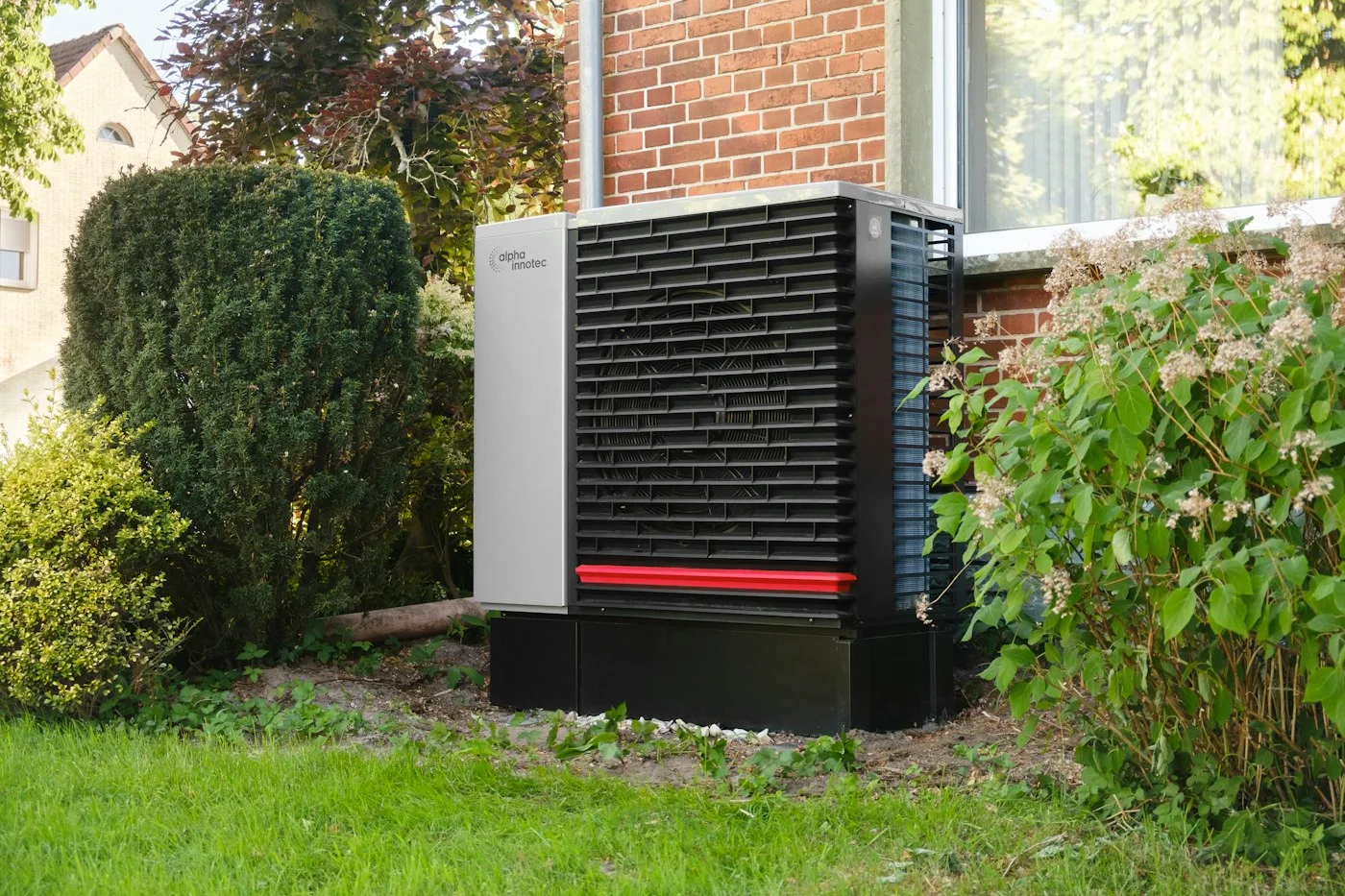
01 · Heat source and delivery
The name describes where the heat goes.
An air-to-water heat pump takes environmental heat from the air and transfers it to the heating water. Ground-source (brine-to-water) systems use a closed fluid loop in the ground. Water-to-water here means using groundwater. All three also require electricity.
02 · A fair comparison
Ask the same questions about all three.
Start by establishing which sources can be developed at the site. Then compare specific designs for the same house. A type name alone does not provide a reliable electricity demand or total price.
On narrow screens, scroll the table sideways. With a keyboard, focus the table and use the arrow keys.
| Criterion | Air-to-water | Ground-source | Groundwater |
|---|---|---|---|
| Heat source | Outdoor air. | Ground; a brine solution carries heat in a closed loop. | Groundwater; water is extracted and returned after transferring heat. |
| Space & installation | A suitable location and airflow; no source borehole. Indoor, outdoor or split configurations are possible. | Boreholes for vertical probes or suitable land for collectors; allow access for the works. | An abstraction well and a reinjection well; their position, accessibility and spacing require specialist design. |
| Winter conditions | Even cold air provides heat. Colder air increases the temperature lift needed to supply the heating system. | Vertical probes use relatively steady temperatures. Shallow collectors are more affected by the seasons. | Groundwater offers relatively stable temperatures. Available quantity, quality and pumping demand remain important. |
| Check first | Noise at the proposed location, airflow and clearances required by the equipment and site conditions. | Geology, usable land, drilling feasibility and notification or permit requirements. | Water quantity and quality, well design and permission to extract and return groundwater. |
| Make costs visible | The unit, installation, pipe routes and connection works. | The heat pump plus complete source development and reinstatement of affected surfaces. | The heat pump plus wells, site investigations, pumping electricity and monitoring and maintenance. |
Vertical boreholes or ground collectors – what is the difference?
A vertical ground probe accesses heat through a borehole. A ground collector uses pipes close to the surface and needs suitable land. To allow regeneration, that area should remain unsealed and free of buildings. Required length, depth and area depend on heat demand and ground conditions; a general rule of thumb is not a design.
For every type: Low required heating temperatures support efficient operation. Assess heat load, heat emitters, hot water and the expected seasonal performance factor together for your house.
03 · Ulm
What is possible at your address?
These three steps apply to sites in Ulm, Baden-Württemberg. For Neu-Ulm, use the responsible Bavarian authorities and site information.
1 · Explore the site
For ground-source systems, ISONG provides initial information on geology, restrictions and possible drilling risks. A map does not replace specialist design or permission.
2 · Clarify the process
Ask the responsible water authority which notifications or permits your proposal needs. The City of Ulm provides an entry point for ground works and groundwater heat pumps.
3 · Develop the design
Have the feasible sources assessed for your building. Record the proposed location, noise, pipe routes, required documents and information that is still missing.
Could a heat network also be an option? Check district heating in Ulm using a specific connection enquiry →
04 · Different applications
Two different tasks, two other solutions.
Air-to-air heat pump
Supplies heat directly to room air, for example through a reversible split air conditioner. It does not need water-based radiators. Domestic hot water needs a separate system. Air distribution and indoor and outdoor noise belong in the design.
Domestic hot-water heat pump
Heats only domestic water, for example for showers and the kitchen. It does not replace space heating. Its heat source, installation room and integration with the existing hot-water system must be suitable.
Monobloc or split? These terms describe the construction and location of the equipment components. They are not additional heat sources.
05 · Your next step
Take five questions to your first discussion.
- Which heat sources are feasible at my site, and what evidence supports that assessment?
- Which heat load, heat emitters and temperatures are assumed for space heating and hot water?
- Who will clarify the location, noise, connections and any required notifications or permits?
- Does the quote fully include source development, ground works, reinstatement, electrical work and commissioning?
- What seasonal performance factor is expected, and under which assumptions? Does its boundary include hot water, backup heating and auxiliary electricity?
Bring consumption bills, heating-system details and a site plan. Mark unknown information as unresolved. Compare investment and running costs over the same period.
Sources and scope
Editorial review: 8 November 2026. The selection guide and principle diagram are our own presentations based on the sources below. This comparison is not a design for a specific building. External sources are in German.
View technical sources and local information
- BWP: operation and heat sources
- BWP: outdoor air
- BWP: boreholes and ground collectors
- BWP: groundwater
- German Environment Agency: efficient heat pump planning
- LGRB: ISONG and site information
- City of Ulm: notifying ground works or applying for permission
- Consumer energy advice: air-to-air heat pumps
- Consumer energy advice: air-to-water and hot-water heat pumps