



Home / Grid & controllability
Home chargers, heat pumps and batteries: what does Section 14a mean?
Planning a new appliance? Clarify controllability, metering and your electricity contract together. Section 14a EnWG allows the grid operator to temporarily limit certain appliances’ electricity imports during grid constraints. In return, grid charges are reduced.
Does this apply to me? · Compare charge options · Prepare for a discussion

When do the requirements apply?
The new requirements generally apply to appliances commissioned on or after 1 January 2024, connected to low voltage and with an electrical grid connection rating above 4.2 kW for the appliance or combined installation. For heat pumps, the electrical input matters, not the heat output.
Home charger
Charging points that are not publicly accessible are covered. For a typical new 11 kW home charger, controllability therefore belongs in the connection design.
Heat pump
Supplementary and emergency heaters count too. Several heat pumps operated by the same party behind one grid connection are added together. The same aggregation rule applies separately to space cooling.
Battery storage
Charging from the public grid is what matters. If a battery is technically capable of grid charging, a current software setting of “PV charging only” does not itself exempt it from the requirement.
Appliances up to and including 4.2 kW are generally outside the rules; the aggregation of heat pumps or air-conditioning units still needs to be checked. Specific exemptions, for example for certain commercial installations, require specialist assessment.
What remains available during a power limit?
Direct control
At least 4.2 kW of grid imports is generally available for each individually controlled appliance. For heat pumps or space cooling above 11 kW, including combined installations, the current higher minimum is 40% of the grid connection rating.
Shared control through an EMS
An energy management system distributes the permitted combined import power among connected appliances. This allowance is calculated using specified factors. Your own solar electricity and battery energy can be used in addition.
Electricity flow and control at a glance
Two ways of controlling appliances: with direct control, each assigned appliance receives a limit. An energy management system (EMS) instead distributes a shared grid import allowance among its Section 14a appliances.

Grid imports are what count: the shared allowance covers the assigned Section 14a appliances. Ordinary household consumption is not included. The EMS can also take account of solar electricity available at the same time and battery energy made available voluntarily. This illustration is not a wiring diagram and does not show every possible appliance combination.
Source checked on 29 September 2026: Federal Network Agency: covered installations and power reduction rules.
The grid operator sets a power limit. This is not a general disconnection of the household. Lighting and the refrigerator are unaffected. If an appliance can technically comply only by switching off, it may still pause temporarily. Ask for the behaviour of the specific model to be explained.
Distinguish PV clearly: Section 14a governs grid imports, not PV exports or compulsory battery discharge. Separate EEG rules also apply to solar systems. Understand solar peak legislation and smart meter requirements →
Which grid charge option suits you?
Module 1 · Fixed reduction
The default if no other option is chosen. The annual reduction applies per billing point (market location), not per appliance. It does not require a separate appliance meter.
Module 2 · Consumption
The energy-based grid charge falls to 40%, not the entire electricity price. This requires separate metering and billing of the controllable appliances without registered load-profile metering. No fixed grid standing charge applies to this option.
Module 3 · Time windows
Available as an addition to Module 1 since April 2025. Requires a smart metering system and a market location without registered load-profile metering. Three local tariff bands apply to all grid imports at that market location. It cannot be combined with Module 2.
Compare annual costs including metering services, control equipment and any additional meter. Clarify with your electricity supplier how the reduction is passed on through your contract. An item shown on the bill alone does not guarantee a correspondingly lower final bill. Module 3 is also different from a dynamic electricity supply tariff.
For the local grid: Ulm Netze – 2026 price sheet, pages 4–5.
What applies in my case?
My installation dates from before 2024. Do I have to switch?
With an existing Section 14a agreement, the old terms generally apply until the end of 2028; covered appliances switch by 1 January 2029 at the latest. Without an old agreement, an unchanged existing installation remains exempt. A voluntary switch is possible but cannot be reversed. Replacement or substantial modification requires a new assessment. Night-storage heaters have their own legacy rules.
Is a digital electricity meter enough?
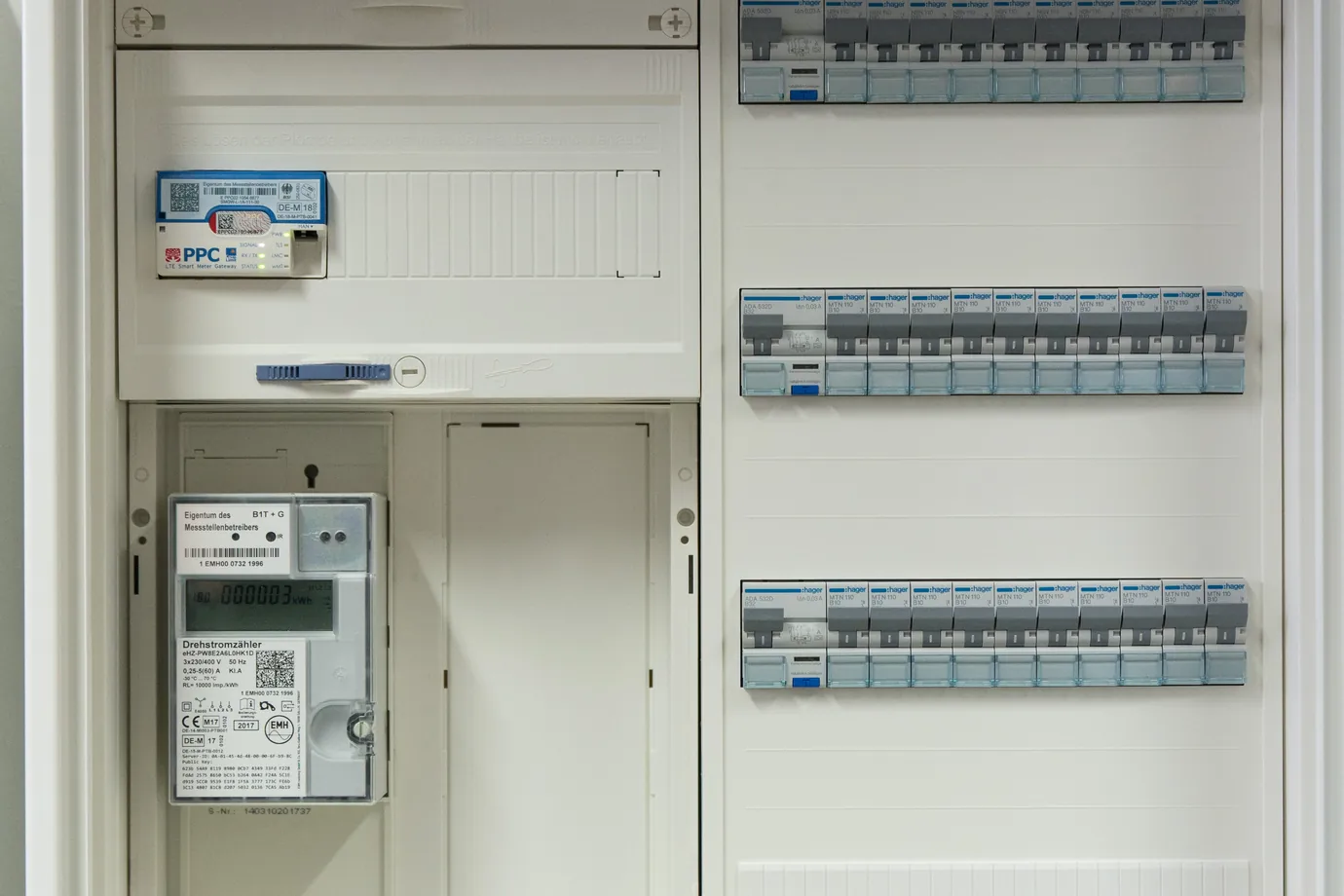
A digital meter alone is not a smart metering system with a communication link. Additional equipment is needed for control. Order the required metering and control equipment and agree interfaces and installation timing with the grid and metering operators. Waiting for installation does not replace the requirement to place that order.
How long can the power be limited?
Grid-oriented control may last only while the specific risk or disruption exists. Separate limits apply to temporary preventive control during the transition: no more than two hours daily and no longer than 24 months after its first use in the relevant grid area, ending by the end of 2028 at the latest.
Four points for your quote and registration.
- Collect appliance details: commissioning date, electrical connection rating including supplementary heating, existing agreements and meter documentation.
- Ask the electrical contractor: direct control or EMS? Which interfaces, cables and costs are involved? How does the appliance work when power is limited?
- Coordinate registration: notify the relevant grid operator before commissioning; order metering and control equipment in line with its requirements.
- Check the contract: choose a module, compare full annual costs and check implementation on your electricity bill.
Ulm Netze: local information, terms and contact · Plan a home charger · Plan your heating · Battery storage
Sources and review date
Checked on 28 September 2026. General guidance; assess the specific installation and metering design with your contractor and the relevant grid operator.