



Electricity + heating + mobility
One home.
Several projects.
One shared plan.
What comes first, what can you prepare, and who needs to be involved? Choose your situation and take away a concrete next step.
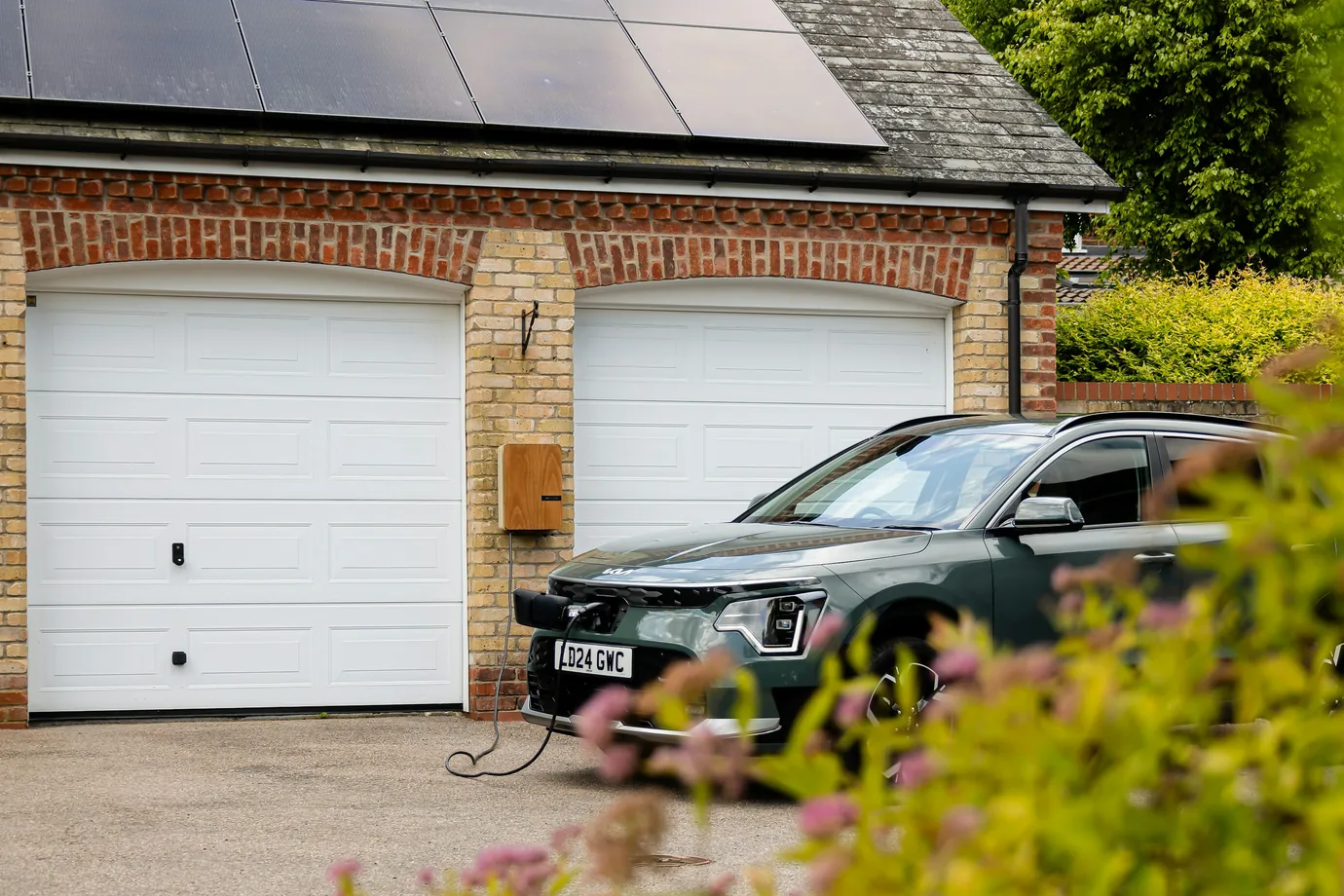
Getting started
Which projects would you like to connect?
These examples help you organise your plans. The right sequence depends on your building, the urgency and the people involved in the decisions.
Your own house
Solar PV now. An electric car later.
You are planning work on your roof and want to allow for a future charging location and electricity demand.
Existing house
Heating soon. Renovation in stages.
Your heating needs a plan, even if windows or insulation will follow later.
Rented or owner-occupied flat
Individual wishes. Shared decisions.
Balconies, parking spaces, the roof and heating involve different people.
Case 1 · your own house
Plan solar PV now and allow for a future electric car.
You want to use solar electricity. Whether and when you will add an electric car is still undecided. Separate today’s decision from this possible future addition.
Today: gather the starting information
Note your current electricity consumption, the condition of the roof and any planned roof work. Record a possible charging location and when the car is usually parked at home, even if you have not decided to buy one yet.
Next: discuss the projects together
Ask your PV installer and electrician to review cable routes, the meter cabinet and a future charging point together. Have justified preparatory work and its additional costs listed separately in the quote.
Later: decide using your actual needs
Once you know the vehicle and how you will use it, choose a suitable charging solution. Then have its compatibility with the existing PV system and controls checked.
What matters when charging with solar electricity?
It also matters whether the car is at home when solar electricity is available. Ask for the plans to be assessed both for your current household and for the possible additional charging demand. Preparing for the future does not guarantee compatibility with any device you might choose.
What you take away: A PV quote with clearly specified preparatory work, an open decision about the future car and a named person to coordinate the electrical work.
Explore further: Verbraucherzentrale: planning a PV system
Case 2 · existing house
Your heating needs a solution. Your house will keep changing.
Your heating may need replacing soon, while insulation or windows will follow later. Consider the timing and the effects of the planned work together.
Today: establish the urgency and gather documents
Gather information on the existing heating, energy use, radiators and known renovation plans. If the heating has broken down, the heating contractor first needs to establish how to maintain heat supply and which temporary solutions are possible.
Next: coordinate the options
Energy advice and heating design should take account of both the current and planned condition of the building. Ask about the heating load, required temperatures and how the proposed system will operate after renovation.
Later: review after the work
After renovation, have the settings and operation adjusted to the changed conditions. Agree during planning who will do this and which documents you will receive.
Clarify district heating in Ulm early
Ask about the connection options for your address, a realistic timeframe, requirements and the costs covered. An area map cannot replace this specific information. If the date is uncertain, record it as an unresolved condition in your plan.
FUG: request a building connection · SWU: clarify your heat connection
Does the whole house need renovating first?
There is no universal answer. A heat pump can also be suitable for an existing house; the building’s condition, heat emitters and required temperatures need to be assessed. Planned improvements should be included in the design.
For renovation in several stages, an individual renovation roadmap developed through energy advice can help coordinate the measures and their sequence. Our planning sheet prepares you for the first discussion; professional building and system design follows from there.
Explore further: dena / Gebäudeforum: individual renovation roadmap
What you take away: An agreed sequence with a plan for heat supply, stated assumptions about the future building and a district heating option that is either clarified or explicitly unresolved.
Explore further: Verbraucherzentrale: an overview of heat pumps
Case 3 · rented or owner-occupied flat
Connect your own plans with the building.
You are interested in plug-in solar, a charging point or future heating. Start by identifying what concerns your own flat and what work would be needed on the shared building.
Today: describe your project
Note your goal, the areas involved and the information available: balcony, allocated parking space, roof or central heating. Gather accessible documents on work already planned.
Next: bring the people involved together
If you rent, start by speaking with your landlord or the responsible property manager. If you own a flat, ask the property manager how the owners’ association can discuss the project.
Later: carry out the agreed steps
Record what still needs coordinating, who will obtain quotes and who will decide. Also ask about ongoing operation, billing and later expansion to other flats.
Three questions for the first discussion
- What plans already exist for the roof, heating or parking spaces, and who coordinates them?
- Which requirements and approvals need clarifying for my specific project?
- Who commissions the work, who pays which costs, and how will operation or later expansion be organised?
Balcony solar or a shared rooftop project?
A plug-in solar device for your own flat and a PV system on the shared roof involve different planning and coordination tasks. For a rooftop project, those involved should first clarify who will use the electricity and who will organise operation and billing.
What you take away: A clearly described project, a contact person and an agreed next step for coordination. You do not need a complete technical design for this first discussion.
Explore further: Regional Energy Agency Ulm
Everyone involved should know these questions.
If several companies or a property manager are involved, name one person to collect unresolved points and bring the answers together.
Your home’s electrical system connects the projects
Electricity flows and the transmission of measurements and control signals are shown separately.

The home electrical system diagram explained in words
Electricity flows: The PV system feeds electricity into the home electrical system through its inverter. The household, heat pump and home charger draw electricity from it. The public grid provides additional supply and can receive surplus electricity. An optional battery stores electricity and returns some of it later, with losses.
Measurements and controls: An energy management system uses available measurements of generation, consumption and exchange with the grid. It can coordinate connected devices according to your settings. The dashed connections represent data and control signals.
The requirements differ: For a home charger, parking time and the charging target matter; for a heat pump, heat demand and permitted operating periods; for a battery, its state of charge and settings. There is no universal order of priority.
Clarify before buying: Which functions do the specific devices in the quote support together? Ask for an explanation of the desired operating sequences, limitations, controls and ongoing costs.
Building and construction work
- What roof, façade or ground work is planned anyway?
- Which cable routes or installation areas affect several projects?
- Which preparations are worthwhile now, and which decisions can wait?
Electrical installation and metering
- Who checks the meter cabinet, connection and metering arrangements for the planned systems?
- Who coordinates the necessary registrations and connection questions?
- Which costs and responsibilities does the quote already cover?
Controls and operation
- Which specific devices and functions are proven to work together?
- Which ongoing fees or manufacturer services are required?
- Who sets up the system and helps with later changes or faults?
Why is annual solar generation alone not enough?
How the systems work together depends on when electricity is generated and needed. A car may be away during the day; the greatest heat demand often falls in months with little solar generation. A typical home battery shifts electricity over limited periods and does not provide storage from summer to winter.
Four cars charging together illustrate the importance of timing. Why does charging time matter? →
Electricity in everyday life · A worked example
One hour. 6 kWh of solar electricity.
Suppose your PV system supplies 6 kWh to the home during one hour. In this simplified example, generation and demand are steady and simultaneous, the car is plugged in, and no home battery is used. These are chosen example values, not a forecast for your house.
Household
0.5 kWh
Electricity for the appliances already running.
Heat pump
1.5 kWh
Electricity supplied to the heat pump, not the heat it produces.
Car charging
3.0 kWh
Electricity supplied at the charger, including vehicle charging losses.
Grid export
1.0 kWh
The remaining solar electricity flows into the public grid.
The balance: 0.5 + 1.5 + 3.0 + 1.0 = 6.0 kWh. Each unit of solar electricity has one destination. The same electricity cannot be counted in full towards the household, car and heating savings at once.
What changes if the car is away?
With all other assumptions unchanged, grid export rises from 1 to 4 kWh. Charging later uses whatever solar, stored or grid electricity is available then. A large annual PV yield alone does not tell you how much solar electricity reaches the car.
Set the rules around your day
An energy management system can coordinate compatible devices around your requirements. Agree when the car needs to be ready and which heating needs must be met. Before buying, check device compatibility, recurring fees and the handover with the installer.
Verbraucherzentrale: home energy management (German) · Addition reviewed on 6 November 2026. The numerical balance is our own simplified example.
My planning sheet
Use the same sheet for solar electricity, heating and mobility. Four questions guide each route: What do I know, what is unresolved, who can help, and what will I do next? Your project and timing provide the framework.
Enter your notes directly in the six fields. “Still to clarify” is a useful answer. Copy, download or print your plan to take it with you. You enter information from other calculators yourself; there is no automatic transfer between topics.
Your next step on one sheet
Bring together results from our calculators and your own notes. All six fields may remain partly or entirely open. Results from external tools can be pasted into your notes manually.
Your plan is kept temporarily in this browser tab. No notes or calculator results are sent to the website. Clear the plan on shared devices. Export important information before ending the browser session.
What would you like to change? For example, plan rooftop solar or prepare a charging space.
Known figures and documents. Record sources and dates, and identify assumptions.
Which information or decision is missing? “Still unknown” is a useful answer.
For example, property management, an energy adviser or a contractor. No personal contact details are needed.
What will you ask, collect or arrange next, and who will do it?
For example, “Ask for a reply next week” or “Appointment still to be arranged”.
View the complete plan as text
No request for advice is sent. Each result is a dated snapshot in its original language. To replace a result after recalculating, add it to your plan again.
Example: solar PV now, a car later
- Project: Solar PV on my own house; an electric car as a later option.
- What I know: Roof work is planned; electricity consumption is known. The car would mainly be at home in the evenings on weekdays.
- What is unresolved: Which preparations are sensible now? The vehicle and purchase decision are still open.
- Who can help: PV installer and electrician; an energy adviser if needed.
- What I will do next: At the site visit, request separate quote items for PV and useful preparatory work.
- Date: Site visit: …; review the quotes together on …
Example: heating soon, renovation later
- Project: Replace the heating; renovate in stages.
- What I know: The heating is prone to faults; energy bills are available.
- What is unresolved: The district heating connection and supply date are unknown; building data and future heat demand need clarifying.
- Who can help: Heating contractor, energy adviser and the responsible heat supplier.
- What I will do next: Gather building data and request connection information, including the timing.
- Date: Information by …; discuss the options on …
Example: a flat and a shared roof
- Project: Use solar electricity in a rented flat; there is no suitable balcony.
- What I know: The building has several flats; the landlord is known.
- What is unresolved: Are there plans for the roof, and who coordinates them? The model and participation are still undecided.
- Who can help: Start with the landlord or responsible property manager; for flat owners, the property manager and owners’ association (WEG).
- What I will do next: Describe my interest and ask for a contact person or an initial discussion.
- Date: Response requested by …; next discussion on …
When recording what is known, include the reason for the project, available documents and the sources of important information. Distinguish current facts, assumptions about the future and information still missing.
Relevant documents for each topic · Take my questions to an adviser
In our calculators, choose “Add to my plan” to bring a snapshot here. Your plan remains available in the same tab during your browser session. Paste results from external providers into your notes yourself.
Before deciding: do the parts fit together?
- Scope: Is it clear which work is included in each quote and what is still missing?
- Costs: Are investment, preparatory work and running costs listed separately? Are shared tasks such as scaffolding or meter alterations counted only once in your overall comparison?
- Assumptions: Do the quotes use the same household, building condition and time horizon? Is the same solar electricity being counted as a saving more than once?
- Dependencies: Which information, technical assessment or agreement is still missing? Who will clarify it before the work is commissioned?
- Funding: Have the steps required before signing a contract or starting work clarified for the specific programme.
- Handover: Who coordinates commissioning and explains the settings, documents and contacts for ongoing operation?
A quote with unresolved assumptions may be an interim version. To support your decision, it should explicitly state the conditions and any services still missing.
Take your questions to an adviser.
The Regional Energy Agency Ulm provides advice on buildings and energy, including information for tenants. Technical design requires the relevant contractors; a heat connection requires specific information from the responsible supplier.
Take your six entries with you. At the end of the discussion, agree on a next task, a responsible person and a date for a response.
Sources and technical context
- Verbraucherzentrale: planning a PV system
- Verbraucherzentrale: an overview of heat pumps
- Verbraucherzentrale: home energy management
- dena / Gebäudeforum: individual renovation roadmap
- Regional Energy Agency Ulm
- FUG: request a building connection
- SWU: steps for a heat connection
Editorial and source review: 19 September 2026. The three cases are simplified planning examples. The actual design and connection options must be assessed for your building. Check terms and funding procedures at the time of your project.