



Electric mobility · Solar power for your car
When sunshine and parking times align.
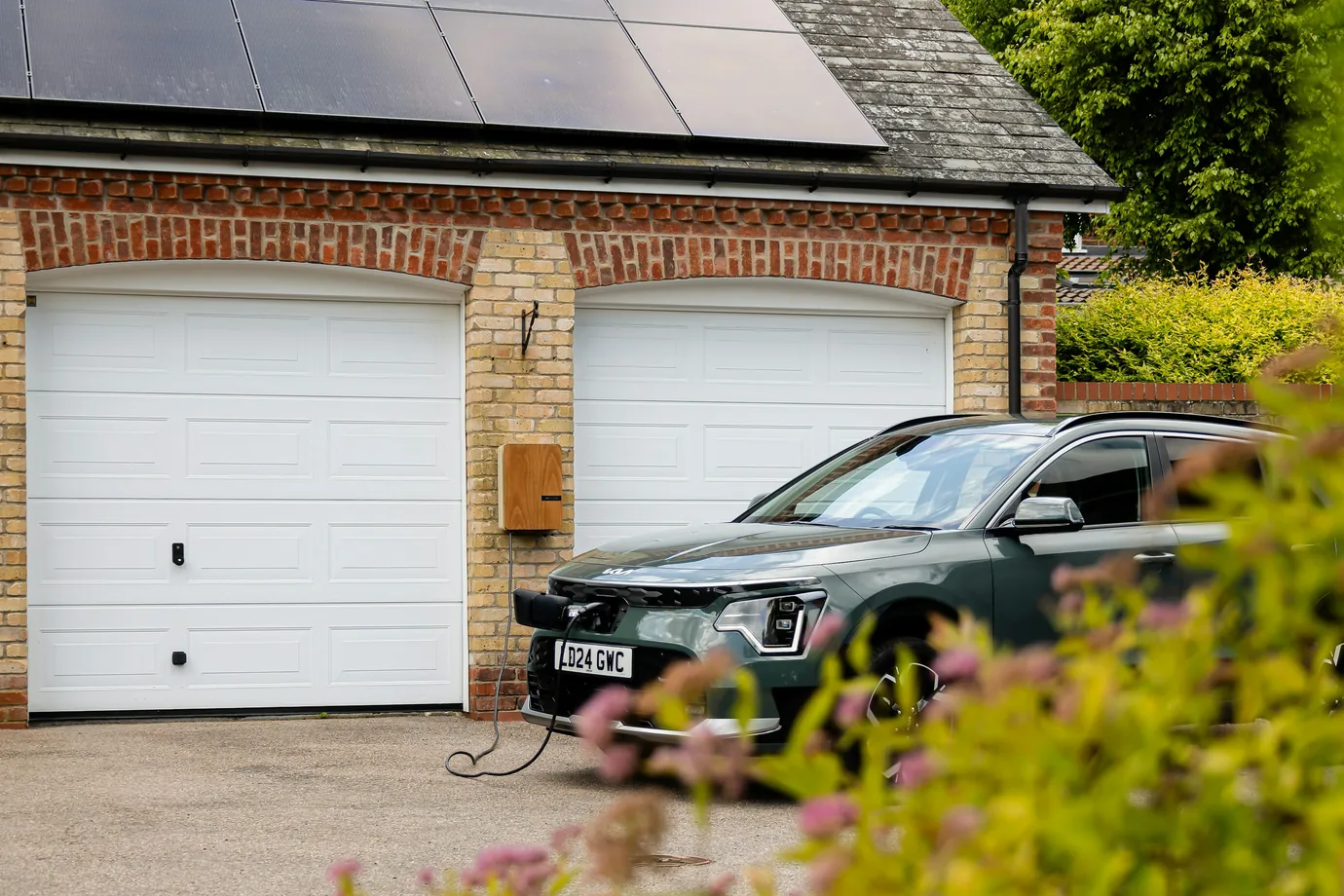
When is your car at home, and how much charge do you need before departure? Two everyday profiles show what matters when charging with your own solar power.
01 · Daily routine
When can your car charge at home?
These two profiles are examples. Your parking times may vary by day of the week; if so, consider them separately.
Profile A · At home during the day
For example, from 10:00 to 16:00
The car is at your own charging space for part of the day. Check whether it can regularly be plugged in during that time and when the next journey starts.
Your opportunity: Use surplus electricity as it is generated. Clouds, household demand and charging limits still need to be considered.
Profile B · At home in the evening
For example, from 18:00 to 07:00
The car is away during the day. Consider weekends, days working from home and other charging locations. The hours with actual sunshine may differ between summer and winter.
Your question: Does parking overlap usefully with generation? Home battery storage is an additional option to assess.
High annual generation does not tell you how much of it reaches the car. Studies of real households also show different results depending on usage and equipment. HTW Berlin: study on solar charging.
Continue to Surplus solar power · the worked example · charge targets · the simulation.
The bars only show when the car is at home; they are not a solar yield forecast.
Profile A · 10:00–16:00
Profile B · 18:00–07:00
For direct solar charging, parking time, connection and actual surplus solar power must coincide.
02 · Available energy
How much is available for the car right now?
Here, surplus solar power means the PV output left after the home’s simultaneous demand. Other appliances and any battery charging given priority reduce the share available for the car.
Power in kW describes the instantaneous flow of energy. Energy in kWh accumulates over time. A brief power peak therefore does not necessarily provide enough charge for your next journey.
With surplus control, a suitable system adjusts charging to the available power. Minimum power, response behaviour and equipment compatibility limit how well this works in a particular household.
Find out more: HTW Berlin: wallbox inspection and control behaviour
Two hours of sunshine. Enough for tomorrow?
Illustrative calculation: You want to add enough charge for a 40 km journey. At an assumed 20 kWh per 100 km including charging losses, this requires 8 kWh at the charge point.
- Generation and household demand: Assume a constant PV output of 4.5 kW for two hours. The house uses 1.5 kW of this. There is no home battery in this example.
- For the plugged-in car: This leaves 3 kW. In this example, the vehicle and charger can actually use that power. Over two hours, this gives 3 kW × 2 h = 6 kWh.
- Remaining to reach the target: Of the required 8 kWh, 2 kWh is still missing. This must come from further surplus solar power, the grid or another charging opportunity before departure.
What if the car is away during those two hours?
Those 6 kWh are then unavailable for direct charging at the charge point. Without storage, the solar electricity generated during that period cannot be used later in the evening. If there is no other charging before departure, the full 8 kWh remains outstanding.
All figures and the constant output are assumptions, not a yield forecast. Charging losses are already included in consumption. In practice, sunshine, household demand and charging vary; not every equipment combination can charge at 3 kW. These two hours do not establish an annual solar share.
03 · Set priorities
How much charge must be ready for your next departure?
Discuss which of these targets your system supports with the installer. Names and functions vary between manufacturers.
I have time and want to use as much surplus power as possible.
The car charges when enough surplus power is available. With little sunshine, charging may not start or may pause. Check in good time whether you have enough charge for your next journey.
I need a certain amount of charge by departure.
A suitable system can prioritise solar power and add grid electricity when necessary. Clarify how to enter the departure time and charge target, and whether the vehicle’s state of charge is available to the system. If this function is missing, you need a suitable manual routine.
I need to leave again soon.
The charge needed immediately then takes priority. Use the intended mode within the power approved for your connection. Available solar power can contribute part of it.
Find out more: HTW Berlin: functions and differences in solar charging
When sunshine is limited: First check the charge you need and your next departure time. A high solar share only helps if your mobility needs are also met.
Using solar power, choosing cheap tariff periods and reducing local grid loading are different objectives. Why does charging time matter too? →
04 · Coordinate the equipment
Take these questions to your installer.
- Compatibility: Do the inverter, meter, energy management system and charger support the desired controls in this exact combination?
- Measurement: How does the system detect the power currently imported or exported at the grid connection?
- Small surpluses: What is the minimum charging power possible with the vehicle? Is automatic phase switching supported and approved by the manufacturer for this combination?
- Interruptions: How do the car and charger respond to clouds, charging pauses and the return of surplus power?
- Everyday use: How do you set the charge target, departure time and an urgent charging session? Which functions work without an internet connection?
- Coordination: Who sets up the system, explains its use and remains available if faults occur?
Find out more: HTW Berlin: tested characteristics of charging systems
Bring the equipment model details, existing documents and your parking times. At handover, ask for a demonstration of the planned operating modes.
A real-life experience · co2online
Solar PV, storage and a charger in everyday use
Kai describes purchasing solar PV, storage and a charger together. The initial faults and connection problems that affected the intended charging behaviour are also useful considerations when planning.
His experience relates to his particular equipment combination. Ask for the planned charging functions of your own system to be explained and demonstrated.
Read the experience report at co2online (external)
Report: 4 March 2025 · Link and context reviewed: 29 September 2026.
Do I also need a home battery?
A home battery can shift solar electricity to another time. Its contribution to charging the car depends on whether surplus electricity was available beforehand and how much energy remains after household demand and storage losses. Usable capacity and discharge power also limit its contribution.
First compare charging without storage, changing charging times and a version with storage. When reviewing a quote, ask about the additional benefit for your actual daily routine. A battery does not generate extra solar electricity.
If a heat pump or second electric car is added, the appliances need coordinated priorities. The same surplus kilowatt-hour can only be allocated once.
Find out more: Consumer advice energy service: self-consumption, storage and car charging
What changes if you use different assumptions?
The Solarisator from HTW Berlin simulates the interaction between solar PV, household demand, storage, an electric car and a heat pump. Compare one change at a time, such as system size or a charging profile, and record the inputs you use.
What can the simulation tell you, and what can it not?
Among other inputs, the calculation uses weather data from Lindenberg in Brandenburg for 2017 and predefined usage models. Your roof in Ulm, shading and actual daily routine may differ. The results help compare assumptions and do not replace individual planning.
In particular, check whether the tool’s charging profile matches your parking times. For an initial look at your own roof, also use our guide to the LUBW solar roof map.
An external tool from HTW Berlin; its calculation basis is described there. The link opens the tool.
Your next step
One daily routine, one charging target, one coordinated system.
- Parking times: When is the car at home on typical weekdays and weekends?
- Charging needs: What do you need before your next departure, and which charging can be shifted?
- Starting point: Is solar PV already installed or planned? Which devices need to work together?
- Outstanding question: What should the installer assess first for your situation?
If your charging infrastructure is still undecided, the guide for your own house or the guide for tenants and flat owners can help you arrange the next steps.
My next step
- What I know: I have recorded typical parking times and the energy needed before the next departure.
- What remains open: Which charging can coincide with sunshine, and which devices need to work together?
- Who can help: Solar PV and electrical installers; for tenants or a homeowners’ association, also the landlord or property management.
- What I will do next: I will include my daily routine and charging target in the overall plan and ask for the necessary preparations to be explained.
Sources, example assumptions and editorial date
- HTW Berlin: solar charging of electric vehicles
- HTW Berlin: Wallbox Inspection 2025
- HTW Berlin: Solarisator and calculation basis
- Consumer advice energy service: solar PV and self-consumption
Editorial and source review: 18 September 2026. The parking profiles and 8 kWh example are illustrative scenarios created for this guide. They do not promise a particular yield, saving or level of self-sufficiency for your project. Technical implementation depends on the vehicle, installation and approved equipment functions.