


District heating · Ulm
District heating: from the map to your home.
Check what Ulm’s heat plan says, which provider to contact and what a useful connection offer should include.

01 · Get oriented
Three levels answer different questions.
- Municipal heat plan
Shows possible future heating areas for the city.
A strategic guide, not a connection commitment. - Provider planning
Shows the status and possible expansion of individual networks.
Times and feasibility still need checking. - Your connection
Clarifies the specific address, capacity, date and terms.
Request written details for your building.
02 · Ulm
Use the map as a starting point.
- Find the address in the municipal map. Check its legend, selected layer and planning year.
- Distinguish today’s network from a possible future supply area. The city publishes scenarios for 2030 and 2040.
- Use the SWU Wärmekompass for the status of SWU network planning. A planned area is not an individual connection offer.
- Record the map date and unanswered questions. Then ask the relevant provider about your exact address.
City information, reports and contact →
My heating needs replacing soon. Should I wait?
A future planning area does not guarantee timely supply. Ask for a realistic date and discuss an interim solution or another heating route with an energy adviser if that date is uncertain.
03 · Make it specific
Ask about your address and your building.
FUG
Ask the sales and connection team whether the FUG network can supply your address and which next planning steps are needed.
SWU
Check the local SWU network and submit a connection enquiry via its information page. The published planning status is non-binding.
Have the address, present heating system, annual consumption, desired timing and any available heat-load calculation ready. Consumption in kWh is not the required connection capacity in kW.
What changes inside the house?
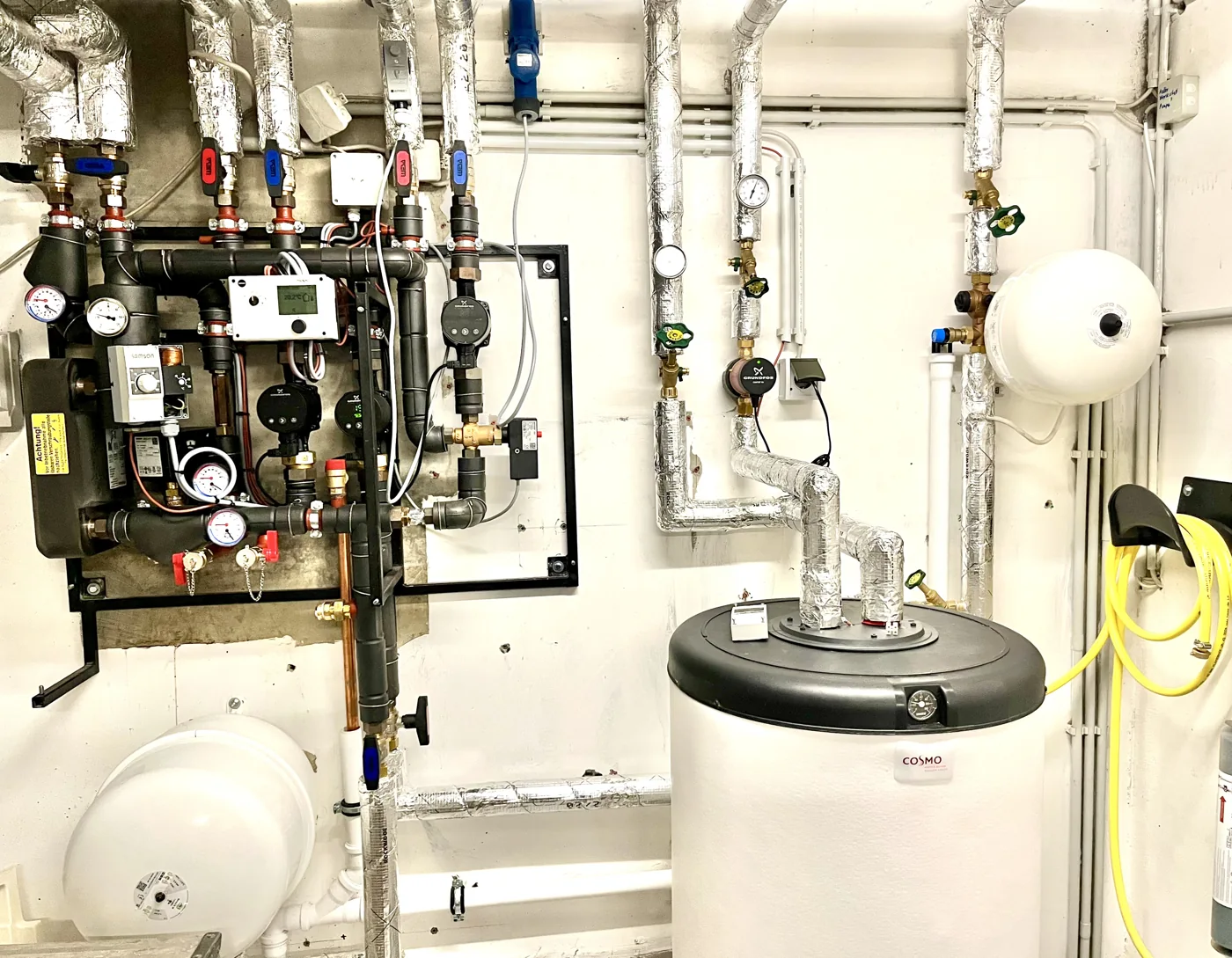
The connection and transfer station supply heat to the building’s heating system. Ask who supplies and owns the station, who connects the internal system, and how hot water will be provided. Include pipe routes, space, access, removal of old equipment and commissioning in the scope.
04 · Compare the full scope
The unit price is only part of the bill.
One-off
Connection works, transfer station and changes inside the building. Check who pays for each item.
Ongoing fixed costs
Base or capacity charges, metering and agreed service costs. Check the tariff’s exact billing basis.
Consumption-related
Delivered heat multiplied by the applicable unit price, plus any separately stated price components.
Use the same annual heat demand, price date, tax basis and comparison period for every option. Check the contract term, price-adjustment rules and which maintenance tasks remain with you. Mark missing costs as unresolved.
FUG price sheets · SWU heating prices
Use the calculator with figures from your actual offer. It does not determine your tariff or allocate costs between apartments.
05 · Your next step
Five questions for the first enquiry.
- Is my exact address connectable, and what is the status of the proposed supply date?
- Which connection capacity is required, and how was it determined?
- Where does the provider’s scope end and the building contractor’s scope begin?
- What are the complete one-off and annual costs, including metering and service?
- What must I provide next, who is responsible and when will I receive an answer?
Sources and scope
Editorial review: 8 November 2026. The planning aids and diagrams are our own summaries. Technical design, connection terms and applicable requirements must be checked for the specific building. External sources are in German.